New: out now in paperback and Kindle

Get Fit for the can't be @rsed

Fitness that starts on the settee.

This isn't about taking up running or jumping around like a border collie with the zoomies. It's a funny, honest guide to moving a bit more, for people who'd rather not. No gym. No Lycra. Nobody shouting at you.

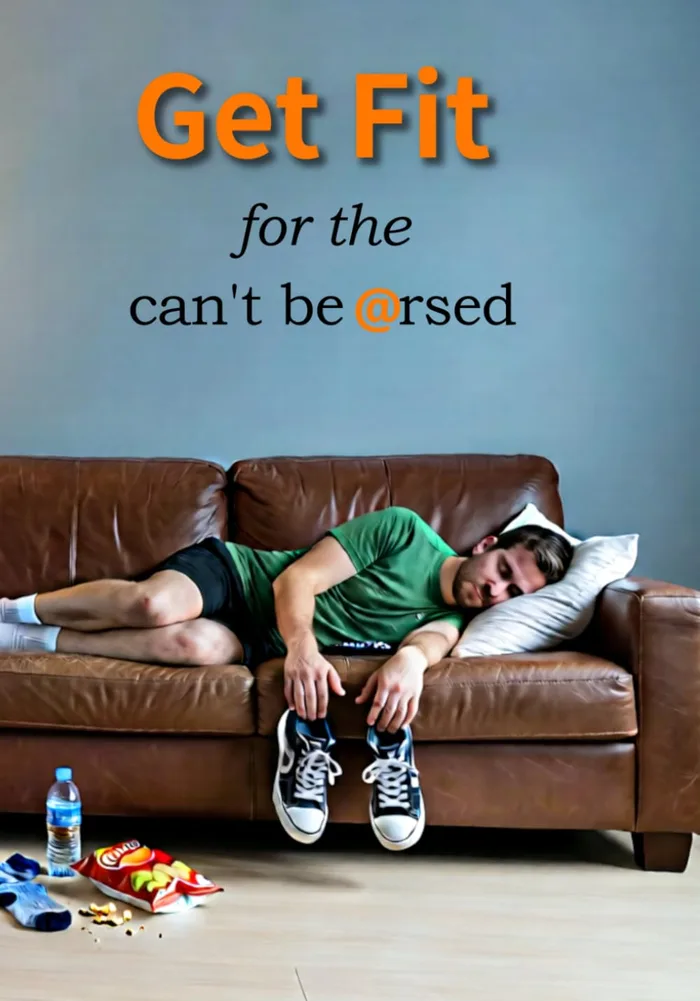
Front cover of Get Fit for the can't be @rsed: a man asleep on a leather settee, still holding his trainers
5 minutesis enough to start
30 daysof stupidly doable movement
1-6/10expected resistance levels
No Lycrano gym, no shouting

How do you get fit when you can't be bothered?

You stop waiting to feel like it. Your brain is wired to save energy, so it will always vote for the settee. This book shows you how to work with it instead of losing the argument.

This book won't

  • Shout at you
  • Guilt-trip you
  • Demand daily workouts (but there are some suggestions)
  • Tell you to "just push through"

This book will

  • Help you understand your own biology
  • Explain why starting is the hardest part
  • Show you how tiny actions create momentum
  • Give you permission to start small
  • Quietly help you build fitness in a way that lasts

Expected resistance level

How @rsed are you?

The book opens with a forecast: how much resistance to expect from your brain before you even start. Find your level and it tells you which section to read first.

  1. 1

    Barely @rsed enough to moan

    Low resistance. Minor grumbling possible, but unlikely to interfere with proceedings.

    You're probably ready for Section 4: Get Fit for the Slightly @rsed. Proper running, walking, swimming and gym progressions.

  2. 2

    Mild resistance

    Scattered sighs with the occasional eye roll. Should clear once movement begins.

    Try Section 3 to understand your fitness, or Section 4 if you're ready to actually train.

  3. 3

    Moderate resistance

    Increasing chance of "I'll do it later", with excuses developing throughout the morning.

    Head to Section 2: five-minute movement. Walk while the kettle boils. It counts.

  4. 4

    High resistance

    Stormy with scattered sighs. Prolonged eye rolling and sudden interest in completely unrelated jobs likely.

    Section 2 is definitely your territory. Start small: stand up during the adverts.

  5. 5

    Severe resistance

    Full hostage negotiations expected. Brain actively presenting several convincing reasons why tomorrow would be better.

    Go to Section 1: Why You Can't Be @rsed. Deal with your brain before worrying about exercise.

  6. 6

    Can't be @rsed

    Heavy sighing, widespread procrastination. Expected to return to the sofa.

    Don't even think about training yet. Put the book down, enjoy the chocolate and come back to Section 1 later.

Anything above level 6 isn't worth considering. You're probably crying on the settee with chocolate by this point.

Movement sneak peek

Three days from the 30-day challenge

Stupidly doable, slightly funny, impossible to fail, and built around normal life.

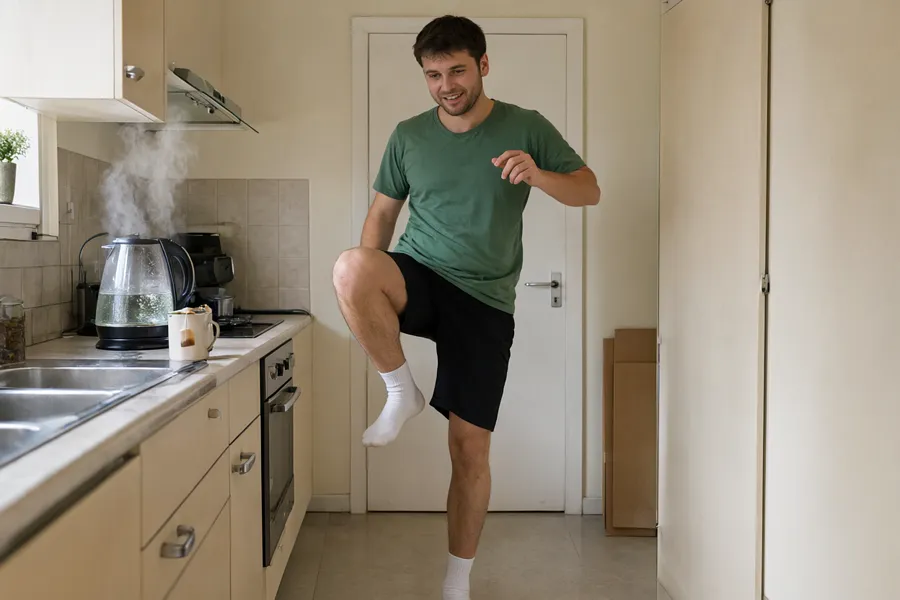
A man in his kitchen doing knee lifts next to a boiling kettle
Day 1 · Kitchen

Kettle Knees

The kettle was going on anyway. You may as well get something out of it besides tea.

What you need

  • 1 kettle
  • 2 knees

What to do

  1. Put the kettle on.
  2. Do knee lifts on the spot until it clicks off.

If it's a long boil, congratulations, you're basically an athlete now.
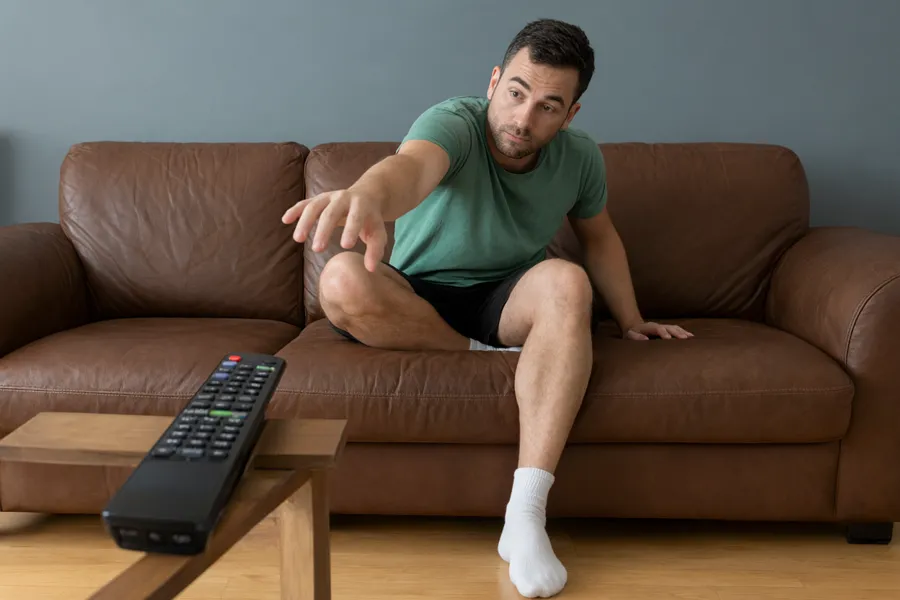
A man on a settee stretching for a TV remote that is just out of reach
Day 10 · Sofa

Remote Reach

Sabotage your own comfort, slightly, on purpose.

What you need

  • 1 TV remote
  • Somewhere mildly inconvenient to put it

What to do

  1. Put the remote slightly too far away on purpose.
  2. Get up every time you need it.

Petty? Yes. But effective? Also, yes. There will be tuts. Ignore them.

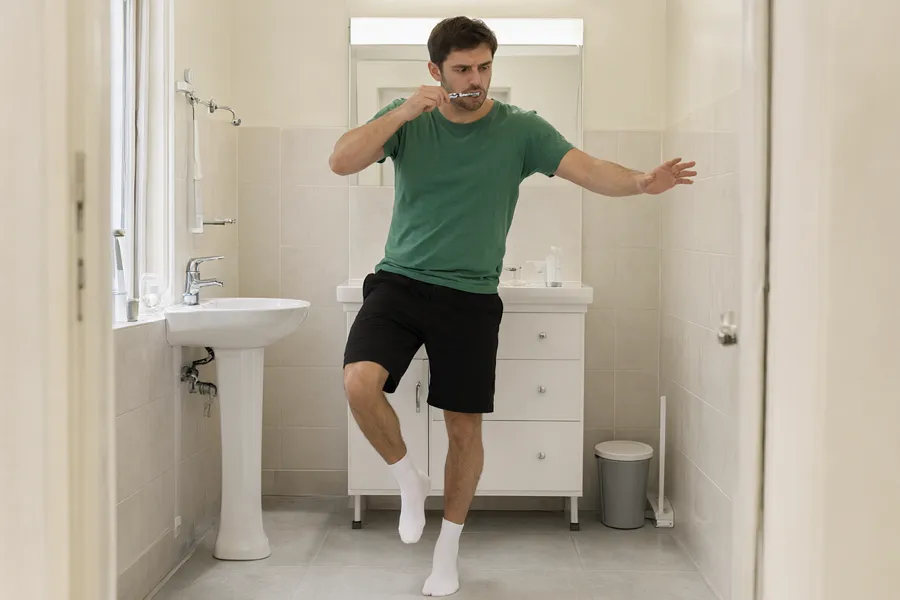
A man standing on one leg in his bathroom while brushing his teeth
Day 22 · Anywhere

Toothbrush Balance

Two minutes of balance training you were going to spend staring at the mirror anyway.

What you need

  • 1 toothbrush
  • 2 legs, used one at a time

What to do

  1. Stand on one leg while brushing your teeth.
  2. Switch legs halfway.

Remember to switch legs before you topple into the sink and lose all dignity.

All 30 days, by habitat

Kitchen

  1. Kettle Knees
  2. Counter Push-Ups
  3. Fridge Door Calf Raises
  4. Stir and Squat
  5. Tea Towel March
  6. Cupboard Reach Stretch
  7. The One-Bag Rule

TV and sofa

  1. Ad Break Sit to Stands
  2. Sofa March
  3. Remote Reach
  4. Cushion Core Twist
  5. Wall Sit While the Recap Plays
  6. Toe Taps During the Theme Tune
  7. Stand for the Cliffhanger

Desk and workday

  1. Email Squats
  2. Meeting March
  3. Printer Walk Bonus
  4. Chair Stands
  5. Desk Calf Raises
  6. Water Bottle Arms
  7. Corridor Lap

Anywhere

  1. Toothbrush Balance
  2. Stairs Excuse
  3. The Song Challenge
  4. Doorway Stretch Rule
  5. 20-Step Mission
  6. The "While I'm Here" Rule
  7. The Five-Minute Potter
  8. Posture Reset & Reach
  9. Build Your Own Can't Be @rsed Combo

The can't be @rsed truth

If your plan relies on willpower, it's probably too complicated.

On why willpower can be overrated

A goal that survives a bad day is better than a perfect plan you never start or finish.

On SMART goals, without making them boring

Rest isn't the opposite of training. It's part of training.

On sleep and recovery

It all counts

You don't need to become a fitness person

People think if it isn't hard enough, long enough, sweaty enough or miserable enough, it doesn't count. Absolute rubbish.

What's inside

Six sections. Start wherever your forecast says

Section 1Why You Can't Be @rsed

Your brain, and why it would rather you didn't. Willpower, tiny wins and the "don't engage the brain" strategy.

Section 2Get Fit for the Can't Be @rsed

Five-minute movement, sneaky TV-time activity, office fitness without the Lycra, and the 30-day challenge.

Section 3Understanding Your Fitness

Why you're already fit for the life you currently live, and how bodies actually get fitter.

Section 4Get Fit for the Slightly @rsed

Running, walking, swimming and gym progressions for when things get serious. Plus sleep, which also counts.

Section 5Keeping It Going

What to do when motivation disappears, and how to become your own personal trainer.

Section 6Useful Information

The stuff everyone else seems to know: a plain-English glossary for anyone who feels like they missed a day at school, plus videos and references.

Nick Roberts

Why listen to Nick?

He's done the Ironman. He's also done the settee.

Nick Roberts has a background in sport and exercise science, a master's degree in psychology and 30 years of teaching physical activity, from climbing instruction to mountain leadership. He has finished multiple Ironman races and helped a few thousand people change their behaviour.

He has also had more than 40 fractures, including both wrists at once. ("It's really hard to put knickers and socks on with a litter picker at first, but then it becomes a skill.") He knows exactly how the body detrains and how hard it is to start again, because he's had to do it. A lot.

That's why this book isn't extreme. The bar has been lowered, on purpose, so you can step over it.

More about Nick

Questions from the settee

Asked without getting up.

I haven't exercised in years. Is this book for me?

Yes, you're exactly who it was written for. It starts with five minutes of movement around things you already do, like boiling the kettle or watching TV, and builds from there at whatever pace you can be @rsed with.

Do I need a gym, kit or Lycra?

No. Most of the book happens in your kitchen, on your settee and at your desk. There are running, walking, swimming and gym progressions later on, but only for when you're slightly @rsed.

Is it just a list of workouts?

No. It's a guide to why your brain talks you out of moving, how motivation and habits really work, and how bodies actually get fitter, so you can make your own decisions and become your own personal trainer.

What if I'm already fairly active?

The book is built around levels. Check your expected resistance level at the start and jump to the section that suits you, including structured training plans that use frequency, intensity and time to keep you progressing.

Is this medical advice?

No. The book is for information and education. Speak to a doctor or other qualified professional before starting a new exercise programme, particularly if you have a medical condition or injury, are pregnant or postnatal, or take medication.

He got up. Eventually.

We don't have to become fitness people. We don't need to love exercise. We don't even need to be particularly @rsed today.

Hungry after all that? Cooking for the can't be @rsed is the other one.

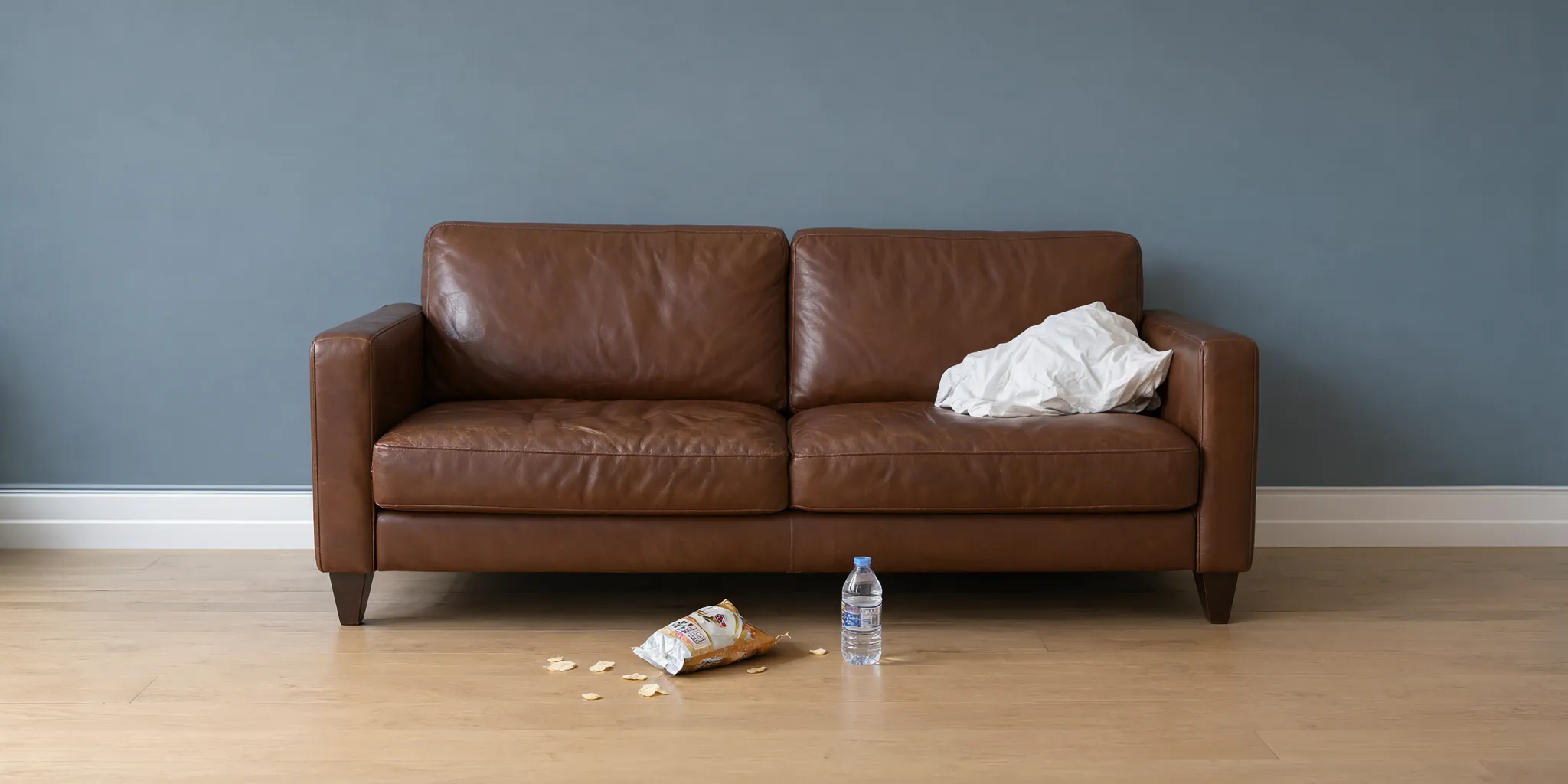
The settee from the cover, now empty, with the crisps and water bottle left behind